
Chatham County Previous-Resident Sources
No single roll names everyone who occupied one Chatham County address. The strongest trail joins sources made for different purposes. Start with the current parcel and deed, then move back through recorded transfers. A deed proves a transfer of title, not who slept in the home. Savannah directories add named occupants and occupation details, while census schedules show a household at a fixed point in time. Sanborn maps and ward notebooks explain the building and address itself. Keep each source label attached to every name so owners and occupants do not blur together.
| Source | Local coverage | Keeper | Address evidence |
|---|---|---|---|
| Assessor and SAGIS | Current digest; parcel layer updated weekly | Board of Assessors and SAGIS | Present owner, PIN, legal description, parcel shape |
| Deeds and indexes | Historic books; online start not published | Superior Court Clerk, GSCCCA, Records Center | Owners, transfers, book/page, legal land identity |
| Savannah directories | Business 1848-49; residents from 1850; digital 1871-1959 | Bull Street Library and DLG | Occupants, spouse, work, address and street order |
| Federal census | Released through 1950 | NARA and library databases | Household members and dated residence |
| Sanborn maps | 1884-1973 | Municipal Archives, DLG and Library of Congress | Footprint, use, number, materials and change |
| Ward notebooks | 1962-66 | Municipal Archives | About 2,000 survey cards and 1,500 building photos |
For a recent transfer, use the Chatham County Board of Assessors and deed index first. For a nineteenth- or twentieth-century household, choose the closest directory and census year. When a street number or structure changed, switch to maps, ward and lot data, tax records, and the city building-research material. This layered method gives previous residents a date and context instead of treating every name as current.
Trace Chatham County Owners Backward
The current parcel card is the cleanest starting point. Record the owner, parcel identification number, situs address, legal description, sale reference, and any deed book or page. A situs address is the physical location; the owner's mailing address is where notices go. They may differ. Then use the GSCCCA real-estate index for Chatham County. Search the current owner as grantee near the reported sale date. The grantor on that purchase becomes the next name to search as an earlier grantee.
- Copy the present PIN, legal description, owner, sale date, and deed reference from the assessor record.
- Find that owner's acquisition deed by grantee name, date, book/page, or instrument number.
- Capture both parties and the exact ward, lot, block, subdivision, or other land description.
- Search the seller as an earlier grantee. Repeat while the same land identity continues.
- When the web trail ends, bring the last citation and names to the Garden City Records Center.
- Grantor and grantee
- The grantor gives or sells an interest; the grantee receives it.
- Chain of title
- The linked series of transfers for the same land.
- Legal description
- The deed's formal land identity, which can remain useful after a street address changes.
The county does not publish an exact start year for its online deed index. That gap makes the physical fallback vital. Viewing records at the clerk's office is free, and copies are listed at $0.50 per page. The Real Estate Division also accepts mailed copy requests and offers electronic certification. Never treat a mortgage cancellation as a new ownership deed. It only records release of the security instrument.
Chatham County Records Beyond Web
The Chatham County Real Estate Division points address researchers to more than an online index. Its Garden City Records Center keeps old deed books, plats, maps, microfilm, and older court files. Public terminals and scanners are available, but an appointment is required for physical records. Bring the last firm book/page, party names, rough date, and legal description. A focused request gives staff a practical place to begin.
This access channel is especially important for previous residents because an old deed may use a ward, tything, trust lot, subdivision, or lot-and-block description instead of today's street number. The main courthouse and Southside office also offer public computers and copies. A mail request is another route when travel is not possible. The recent expansion of the Records Center joined modern e-filing with the older books that still carry Savannah and Chatham land history.
Federal litigation can sometimes add a dated address or property dispute, but it is an event record, not proof of residence. The official PACER service provides federal dockets, including matters in the Southern District of Georgia.
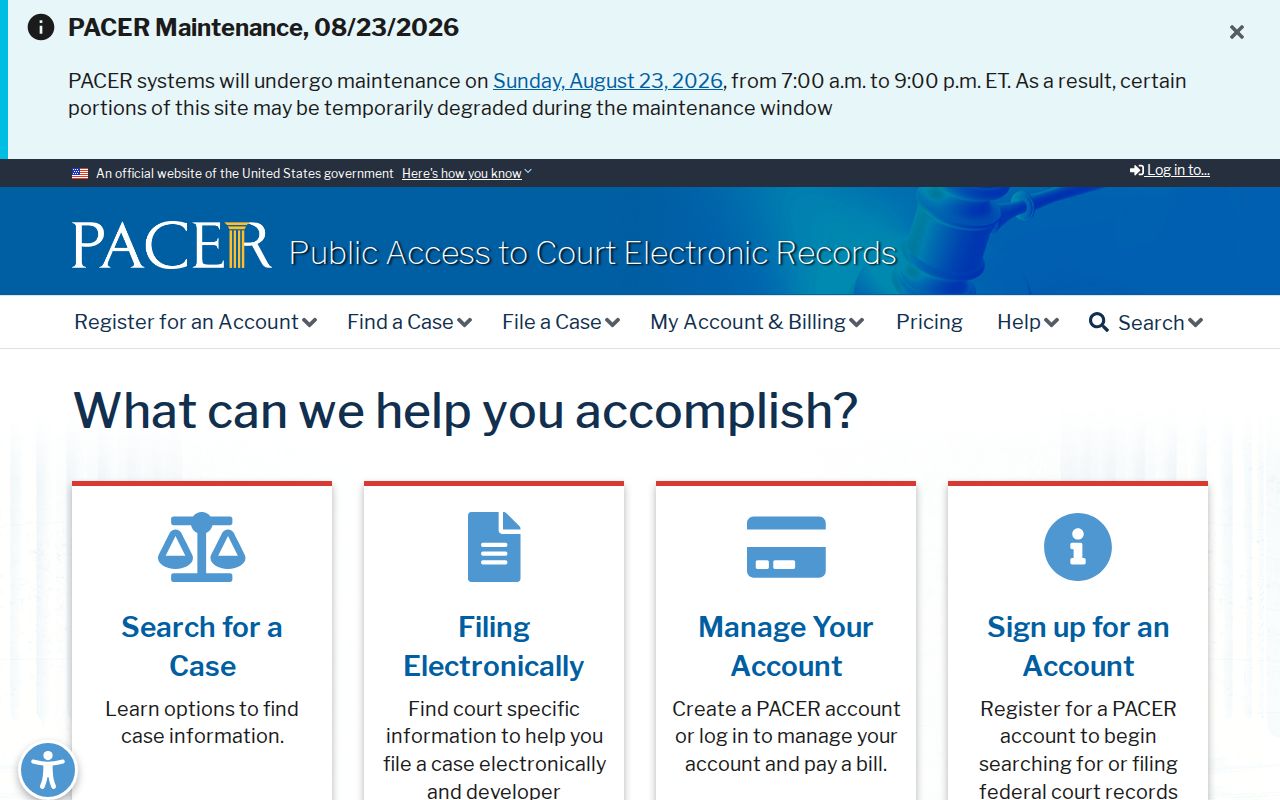
The captured access page shows the separate federal channel. Use it only when a known case gives a sound reason to search.
Savannah Maps Place Past Residents
Names become easier to interpret once the building is fixed in time. Savannah's Sanborn fire-insurance maps cover 1884 through 1973. Online editions include 1884, 1889, 1898, 1916, 1922, and 1955. The sheets show house and block numbers, street names and widths, property lines, footprints, materials, doors, windows, roofs, fire walls, and building use. Revised paste-ins on later volumes can show change between base editions.
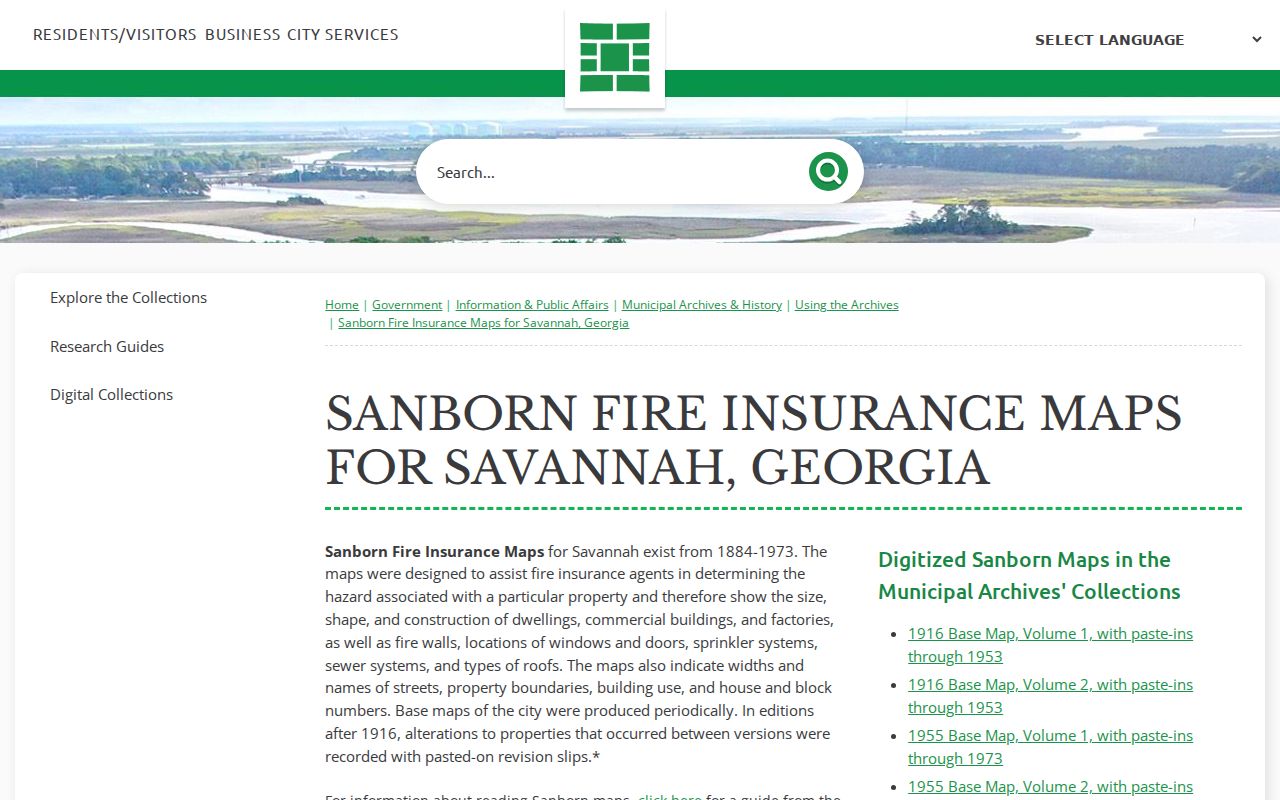
The city map page helps select the right volume and year before a directory address is compared. A missing number may reflect renumbering, demolition, a merged parcel, or a new structure. Match the map footprint and ward or lot before concluding that previous residents disappeared.
The Municipal Archives Building Research Checklist adds tax, permit, photograph, and archival routes. For the 1960s, Historic Savannah Foundation ward notebooks offer an unusual bridge: roughly 2,000 survey cards and 1,500 building photographs made from 1962 to 1966. That evidence can anchor a structure before the search returns to deeds and directories.
Pair Chatham County Directories and Census
Ownership is only half of an address history. Savannah directories may name the head of household, spouse, work, and residence. Their street indexes place occupants in house-number order near cross streets, which is useful when a surname is unknown. Begin with one exact edition. Record the page image, spelling, initials, spouse, work, and address, then inspect the editions just before and after it.
- Choose the closest available directory year and read both the name and street sections.
- Pair observations with released census households for 1870, 1880, 1900 through 1940, or 1950.
- Compare neighbors, ages, family ties, work, and street order without forcing a match.
- Use deeds for ownership and probate or obituary evidence when a resident vanishes from later editions.
A gap can mean death, a move, marriage and name change, brief omission, or a changed house number. It does not prove absence. The complete volume runs and publisher history belong to the Chatham County city directory collection; address-history work uses selected years rather than rebuilding that shelf.
Chatham County Resident Trails After Death
Obituaries and cemetery records can identify relatives and dates, but legal heirship comes from an estate file. Chatham Probate Court holds estates and wills. Superior Court deeds of assent, executor's deeds, and later transfers may show how land moved after death. Savannah Municipal Archives adds cemetery and burial records, lot cards, and older municipal vital collections. Treat an obituary as a lead and an estate record as a separate legal source.
Georgia DPH publishes several vital-record request routes. Its marriage-record page covers state-held applications and certificates from June 1952 through August 1996, while Chatham Probate Court is the local route for county marriage licenses outside that span.
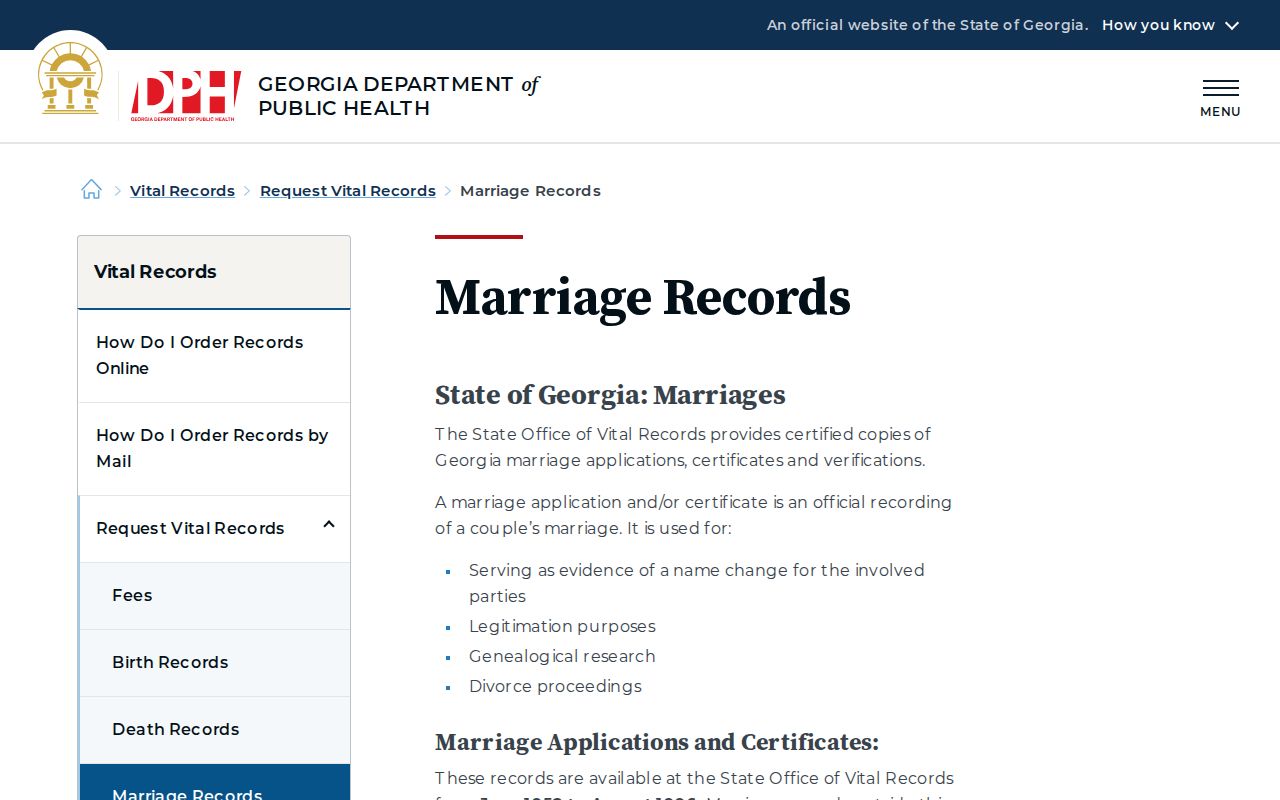
The page clarifies that access and certification depend on the record and requester's role. A marriage event can link names, but it does not alone prove an address.
The current Georgia vital-record fee page lists the state channels and charges for certificates.
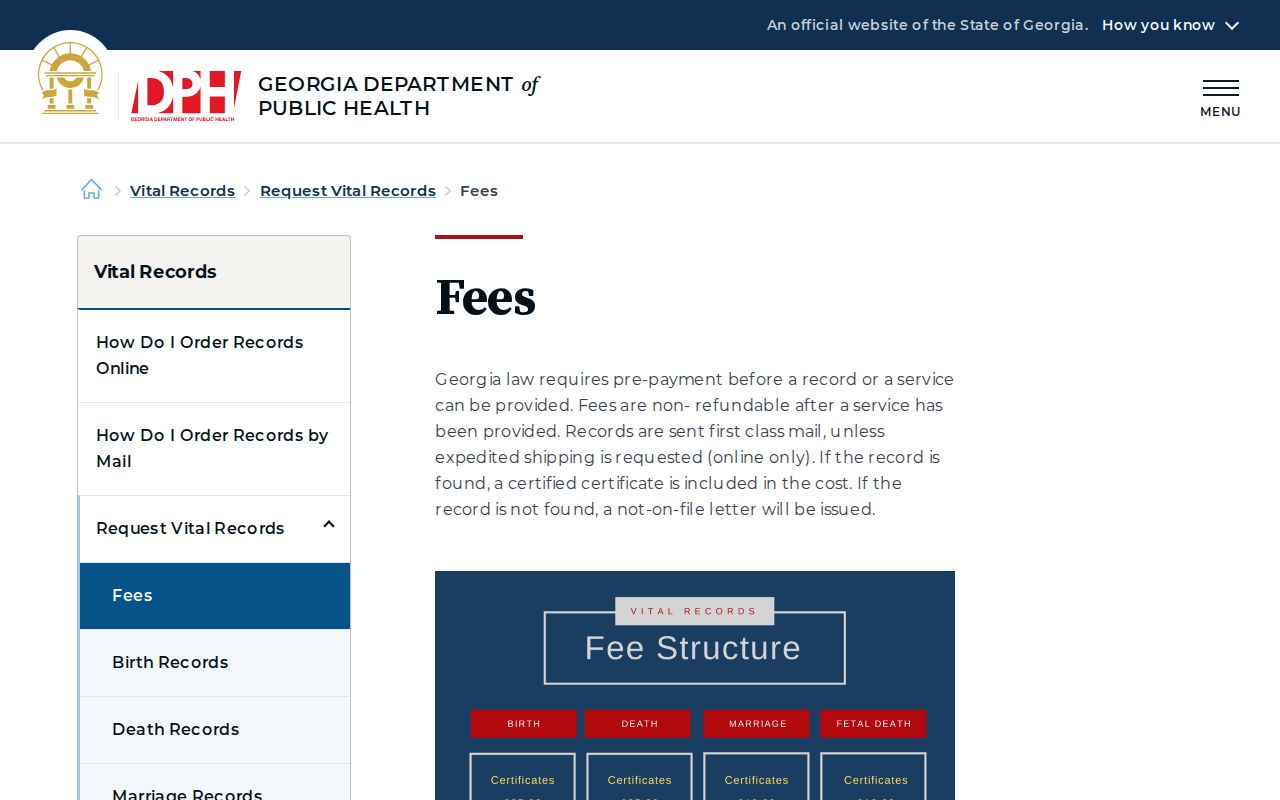
That capture is useful before ordering, since a certified record serves a different purpose from a directory image or plain historical note.
Chatham Court Records Need Context
A court filing may give a party name, role, date, and service or filing address. It cannot prove that the person stayed at that address. Chatham County matters are split among county courts, while federal cases for the area belong to the U.S. District Court for the Southern District of Georgia. Search only when a known dispute, estate, foreclosure, or other event connects the court record to the address trail.
The district court page identifies the proper federal venue. Preserve the case date and party role rather than converting a litigation address into a household claim.
Label Chatham Previous Residents Carefully
A sound address history distinguishes the record's claim. The assessed owner owns the parcel as shown on a dated digest. A deed grantee received an interest in the land. A directory occupant was tied to the address in that edition. A census household member was enumerated there. A court address is tied to a filing, while an obituary or cemetery item supplies family and death clues. Two dated sources with compatible names, roles, and land details are stronger than one loose match.
Negative results also need care. Try initials, spelling variants, former surnames, street suffixes, unit formats, and nearby years. Then change channels: address to PIN, portal to counter, or modern street number to legal description. State only that a person was not found in the index under the criteria used. Older pages, OCR errors, restricted records, and gaps can all hide past residents.
Lawful use. Research Chatham County previous residents for house history, genealogy, and heir matters. Never use a living person's details to track, harass, or harm them.