
Finding Chatham County Residents
Match each record to what it can actually prove. The Chatham County Board of Assessors links an assessed owner to a parcel. A deed, by contrast, names the parties in a transfer. A voter record places a registration at a dated address. A court filing only shows the address someone supplied for that case. For a past occupant, printed directories often work better. Some renters never enter the deed chain at all. The Chatham County residents directory is really a matched trail across sources. It is not one master list.
Begin with the most exact name or address you have. Keep initials, suffixes, unit numbers, and dates intact. If an index returns nothing, try old surnames, alternate street suffixes, and business names before switching channels. A failed web search only means the record sat under different terms.
- Search the county property roll by owner or street address, then save the parcel identification number, or PIN.
- Confirm the point and local jurisdiction in SAGIS. A Savannah mailing name does not always mean the parcel lies within city limits.
- Use the assessed owner and sale reference in the deed index. Compare the legal description, not just the street line.
- Check a voter, court, probate, business, or license index only when that record type fits the question.
- For an earlier household, move to Savannah city directories, released census schedules, cemetery files, and Municipal Archives.
Chatham County Directory Offices
Three desks anchor most current resident research. The Clerk of Superior Court records deeds and holds civil, domestic, and criminal case files. The Board of Assessors keeps the property digest, parcel cards, and owner mailing fields. Georgia election officials offer a private self-check through My Voter Page. They also run a separate paid public-file process. Each source records a different legal event, and none is a household census. The full address-first method is laid out in the Chatham County street directory.
Superior Court Real Estate Division
133 Montgomery Street, Room 304
Savannah, GA 31401
912-434-8970
Chatham Board of Assessors
222 W. Oglethorpe Avenue, Suite 113
Savannah, GA 31401
912-652-7271
Georgia Voter Services
My Voter Page
Statewide self-lookup
Chatham Elections administers local files
Chatham County Property Records
The assessor is often the fastest bridge from a name to a Chatham County address. Its records separate the situs address from the owner's mailing address. The situs address is where the land sits. The mailing address is where tax notices go. A gap between the two proves nothing about where the owner actually lives. Homestead details can hint at owner occupancy. But they never list every person inside the home. The Board of Assessors landing page opens the Records Search (GIS Enhanced). It also offers comparable-sales, sales, and mapping paths.
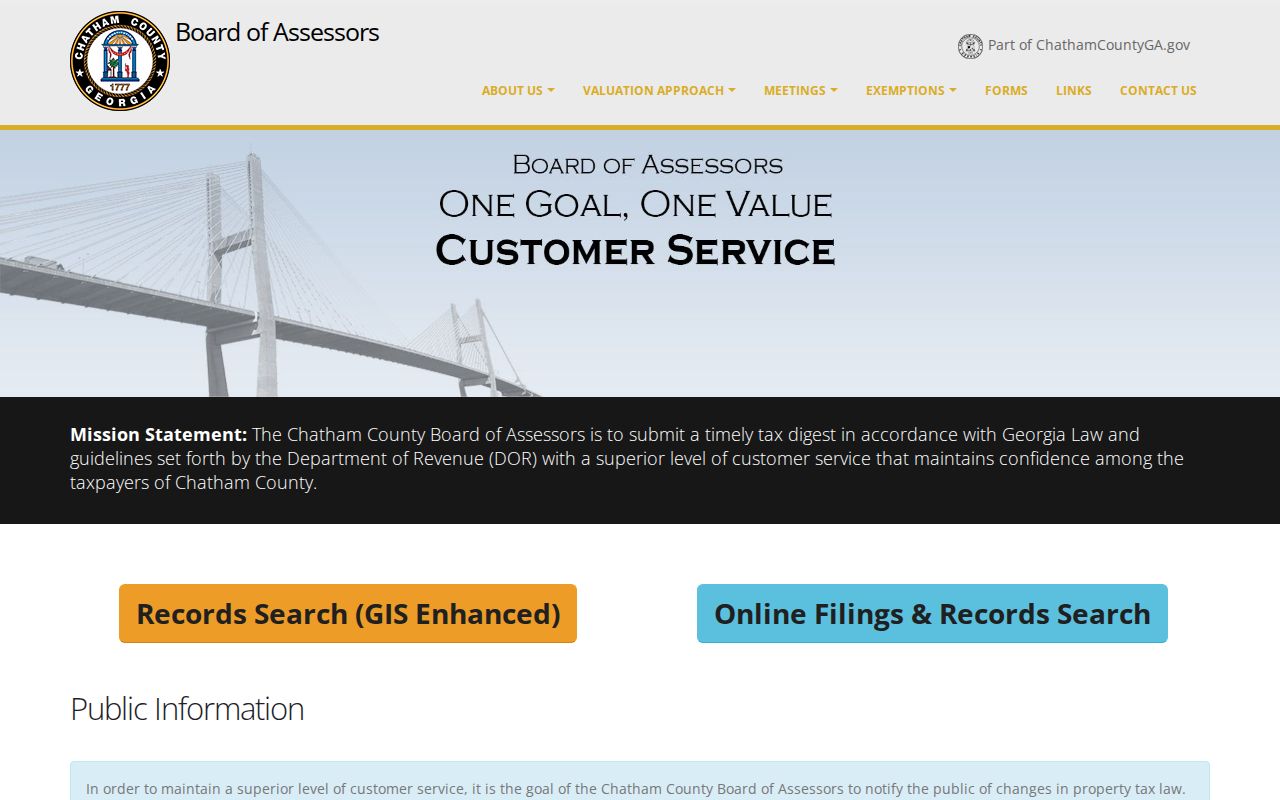
When the dynamic search address changes, the official page remains the stable starting point. Search by both name and address, and save the PIN and legal description for later checks.
| Property field | What it means |
|---|---|
| Owner name | Person or entity assessed for the parcel, not every occupant |
| Situs address | Physical location of the parcel |
| Mailing address | Destination for owner correspondence |
| PIN and legal description | Stable parcel keys that survive spelling and postal changes |
| Sale reference | A lead for locating the recorded deed |
Chatham County Deed Directory
Deed research runs through the Clerk of Superior Court and the statewide GSCCCA real-estate index. A grantor gives up an interest; a grantee takes it. Pick Chatham County and enter the owner's name and sale date. Then compare book and page, instrument type, and legal description. To move backward, search the seller on a confirmed deed as an earlier grantee.
The clerk records deeds, security deeds, liens, plats, UCC filings, trade names, and partnerships. A mortgage payoff usually creates a cancellation of security deed. It is not a new ownership deed. Knowing that distinction prevents a common wrong turn. Searching and viewing at the office are free, with copies at $0.50 per page. Check the Chatham Real Estate Division access page first. Then choose a portal, counter, or mail request.
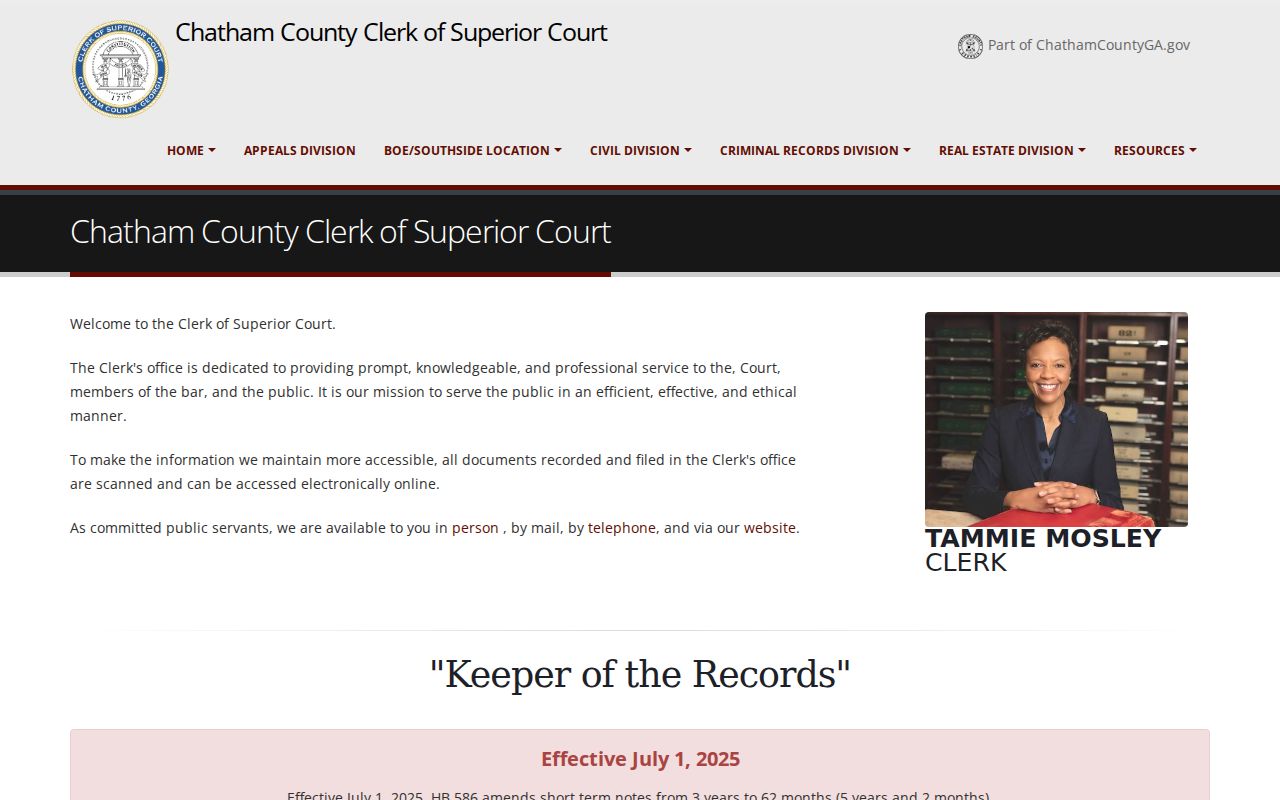
The official clerk page also directs researchers to the historical records center when an older deed book is not online.
Current Chatham County Resident Sources
Modern directory-like records only capture people tied to each system. Owners show up in assessment and deed records. Registered voters appear under Georgia election law, with protected data stripped out. Court parties appear only because they filed. Business and professional indexes prove an affiliation. That is not a home address. Keep a Chatham County resident lookup centered on one person and one fact to confirm.
| Official source | People represented | Record keeper | Access route |
|---|---|---|---|
| Property digest | Assessed owners | Board of Assessors | Free web search or office |
| Voter registration | Active and inactive registered voters | Georgia SOS and Chatham Elections | Self-lookup or paid public file |
| Real-estate index | Parties to recorded instruments | Superior Court clerk | GSCCCA, counter, or mail |
| Court index | Named parties to cases | Participating Chatham courts | County hub, Tyler search, or counter |
| Open Neighborhoods | Public organization contacts | City of Savannah | Free address search |
A commercial people-finder can blend old addresses without showing where they came from. An official roll names a custodian, a date, and defined fields. It may still be incomplete. But you can check it. And you can correct it, at the source.
Georgia Voter Directory Limits
Georgia runs two distinct election channels. My Voter Page takes a first initial, surname, county, and date of birth, then returns one voter's status, polling place, districts, and ballot details. It is not a block browser. A separately ordered public voter file may carry name, residence and mailing address, status, registration date, precinct or district, and participation dates. Participation never reveals ballot choices.
The public file omits phone numbers, dates of birth, Social Security numbers, and driver's-license numbers. VoteSafe also withholds residence addresses for qualifying people affected by family violence or stalking. Inactive status alone does not mean someone moved away. The official voter portal shows the identity-based entry point for a personal check.
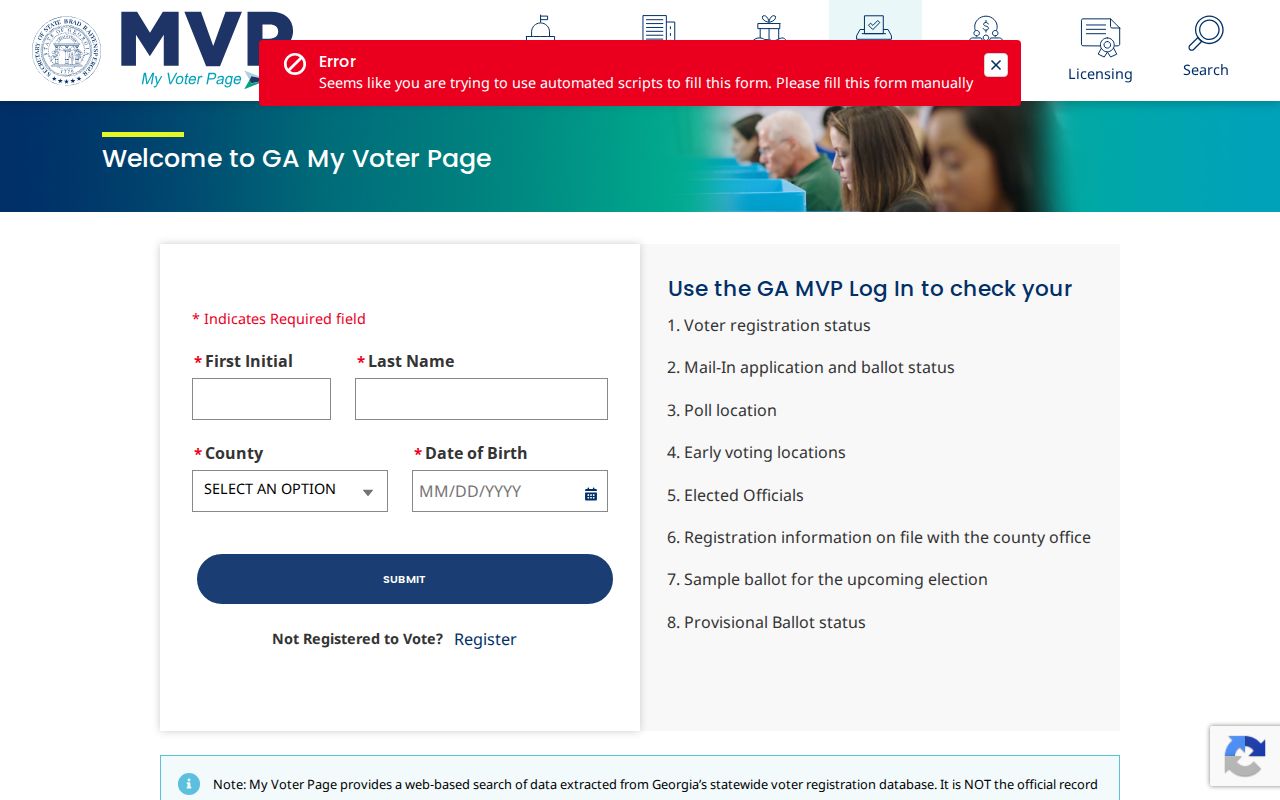
The difference matters: one tool verifies a single registration, while a lawful public-file order supports broader address or precinct analysis under O.C.G.A. §§ 21-2-225 and 21-2-601.
Chatham County Court Records
Chatham County splits its courts into Superior, State, Magistrate, Probate, Juvenile, and Recorder's Court. Each branch keeps its own docket. Superior Court takes the weighty civil, domestic, and criminal filings. Probate Court is the place for estates, wills, guardianships, and county marriage licenses. Recorder's Court deals with ordinance and traffic matters. Remember that a party address in a case file is dated information, not proof of where that person lives now.
The Chatham County courts hub routes visitors to the right court.
Some Superior and State records also surface in Tyler re:Search. Account holders can view a document face for a researched print charge of $0.50. Closed cases may require a case number to pull. Adoption, juvenile, sealed, and restricted files stay closed. That holds true no matter which search channel you use.
- Docket
- The dated list of filings and events in a case.
- Index
- A finding tool that may show names and references without the filed image.
- Certified copy
- An official copy authenticated by the custodian, usually for a separate fee.
Chatham County Tax Records
Two county offices answer tax questions, and they do different jobs. The Board of Assessors sets the appraised owner and parcel details that build the digest. The Tax Commissioner handles bills, payments, and delinquency services. A mailing line on a tax bill is not a resident address. Treat it carefully.
Open the Chatham County property-tax portal when the question concerns a bill or payment. It is not the place to confirm parcel identity.
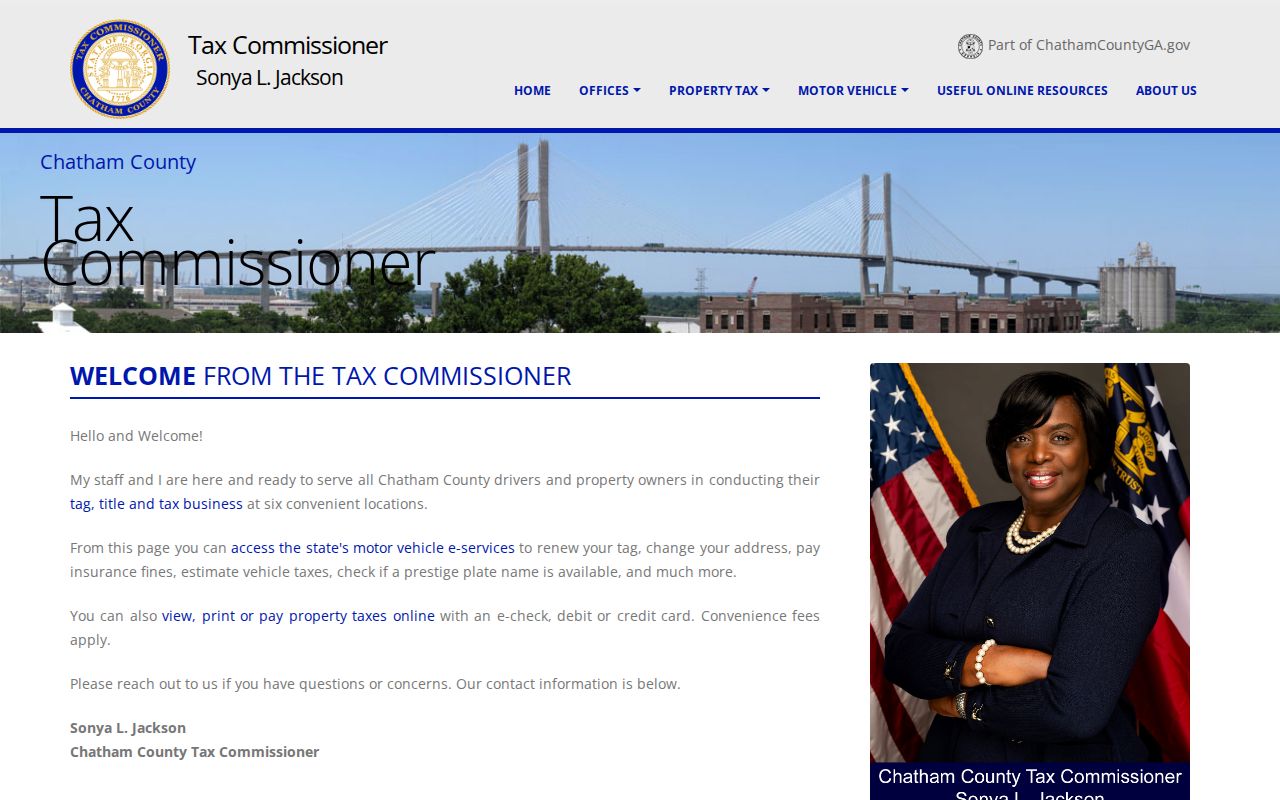
Match the tax account against the assessor PIN and the recorded deed. Together those three sources confirm a parcel and its owner even when each displays the data in a different format.
Lawful use. Chatham County resident records support personal research and civic transparency. Never use an address or protected detail to stalk, harass, or harm anyone.
Historic Chatham Resident Directories
Savannah's official directory holdings begin with business volumes from 1848 and 1849. Resident listings followed in 1850. The free Digital Library of Georgia run spans 1871 through 1959 across nine publishers. A single city directory entry can preserve a name, spouse, occupation, or employer. It may also list an address, home-ownership mark, or death notation. Its street section reverses the search, placing occupants in house-number order.
Several institutions extend the paper trail. Live Oak Public Libraries' Bull Street branch houses the Kaye Kole Genealogy and Local History Room. Savannah Municipal Archives takes research appointments and remote reference questions. Georgia Historical Society and Georgia Archives add cataloged local and state collections. The Chatham County city directory collections walk through the full year runs and abbreviations. They also cover the household-tracing method.
Savannah Records Beyond Directories
Municipal Archives preserves resident evidence that modern indexes overlook. Its licensed datasets include Savannah vital records from 1803 to 1966, cemetery and burial records from 1852 to 1939, burial-lot cards from 1807 to 1995, court records from 1790 to 1934, and land-tax or property material from 1896 to 1938. Naturalization, voter, title, and council records fill defined historical spans too.
The Clerk of Council reports holdings reaching back to 1787. Minutes, oaths, contracts, cemetery deeds, and board files name officials, petitioners, contractors, appointees, and cemetery-lot owners. Treat these as dated civic connections, not a census of residents.
The Savannah open-records page routes requests for any city record missing from a public index.
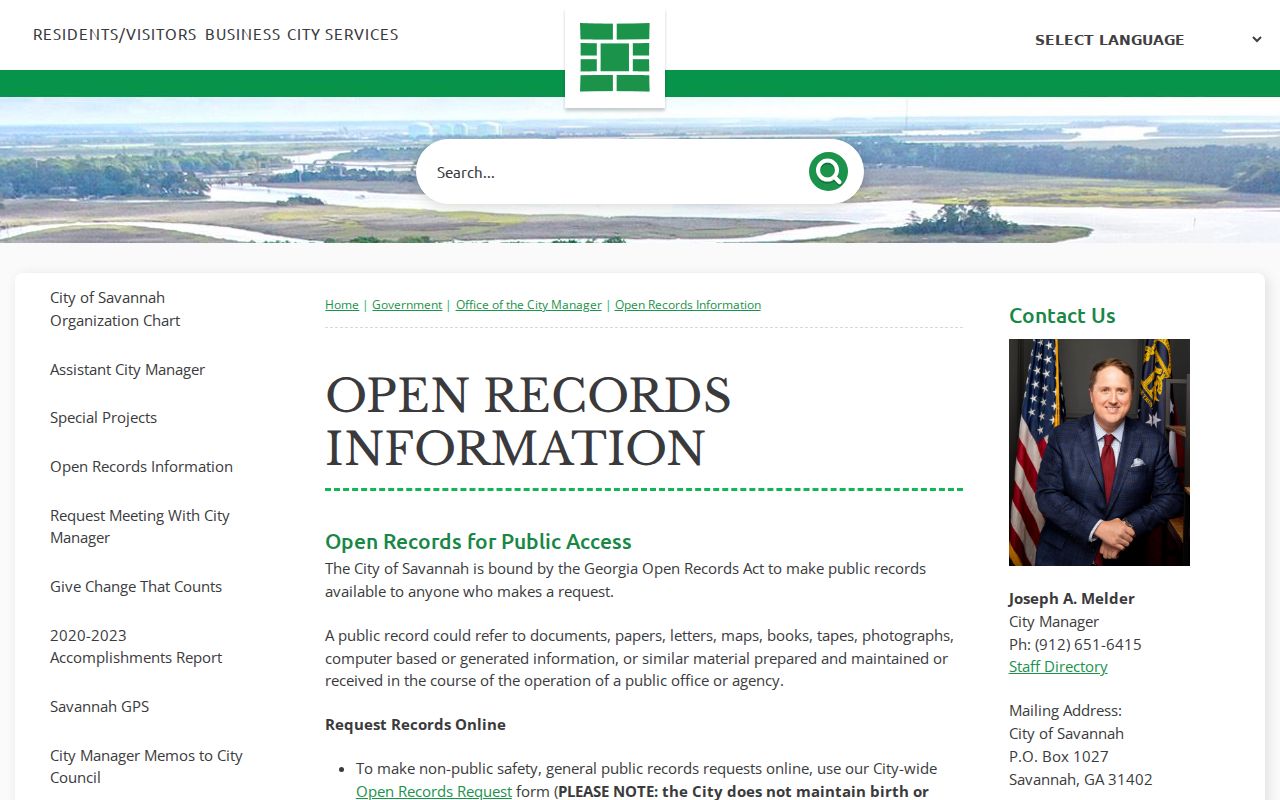
Police and fire requests travel separate routes. Name the department, record series, person or address, and date range in any request.
Garden City Records Backstop
The Garden City Records Center sits at 4225 Augusta Road, Suite C. It stores older civil, criminal, and domestic files. The holdings also include deed books, plats, maps, and microfilm. Public terminals, scanners, and historical volumes make it the natural next stop. This applies whenever a web index runs dry. Appointments are required for physical-record research.
Come prepared. Bring the last confirmed book and page, party names, approximate date, PIN, and legal description. Staff can retrieve an existing record, but the Georgia Open Records Act does not force an agency to build a new list or analysis. Under O.C.G.A. § 50-18-71, the Act generally requires a response within three business days. That response may be an acknowledgement, production, fee estimate, or lawful withholding explanation.
The Georgia open-records form illustrates the statewide request process.
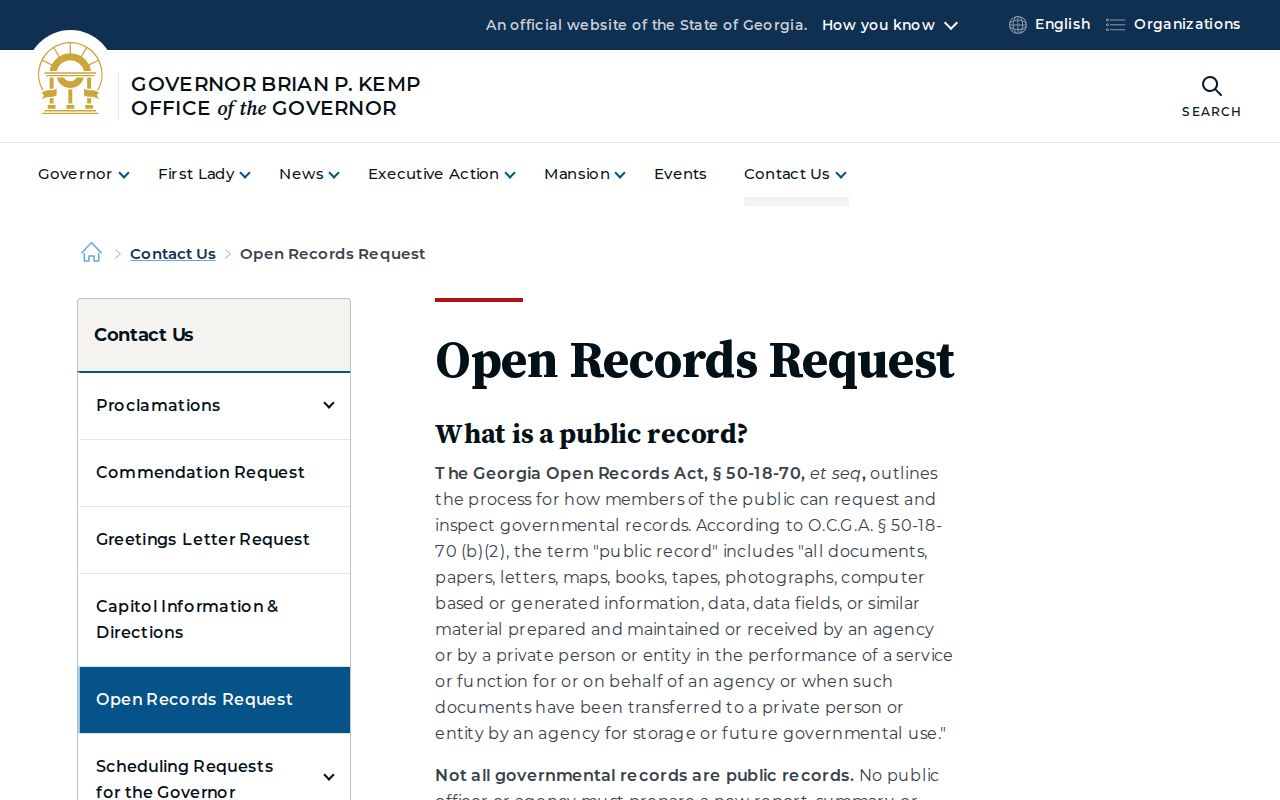
An exact record request beats asking an office to identify everyone linked to a person or address.
Reading Chatham County Resident Evidence
Label each result before combining anything. An owner is the assessed owner or deed grantee. An occupant is the person or business tied to an address in a directory year. A registered voter holds a dated registration record. A registered agent accepts process for a business. A court party supplied an address within a case. None of these terms are interchangeable.
A strong match rests on two dated sources with compatible details. An assessor owner plus a deed grantee sharing the same legal description establishes ownership. A directory entry at that address can establish occupancy for that period. A homestead flag adds support but never names every household member. For common names, keep the middle initial, spouse, occupation, entity punctuation, and party role.
Handle negative results with equal care. Try former names, initials, spelling variants, old street forms, and unit formats. Then move from portal to counter. Go from current roll to archive, or address text to parcel and legal description. Record the outcome as "not found in this index under these criteria." That phrasing stays accurate. It leaves room for coverage gaps, protected records, and indexing errors.
Chatham Heir and Family Trails
Probate files matter most when a resident trail ends with a death. They also matter for an estate transfer. The Chatham Probate Court can hold the will and the estate file. It can also name the personal representative and the heirs. Access depends on the status of each file. The Superior Court clerk often holds the next piece. That may be a deed of assent, an executor's deed, or a later conveyance tied to the same parcel. An obituary adds relatives and dates as leads, but it settles nothing legally. Heirship needs a certified record or a court order.
Start with a full name and death or cemetery evidence. Search the probate file first. Then compare its names against the deed index. Also check the address printed in directories just before the death. A cemetery lot card may reveal a family cluster. For events predating statewide vital registration, other sources can extend the search. Savannah's municipal vital and cemetery collections help, as do church registers, newspapers, and the Georgia Archives. Treat those items as genealogical evidence until a certified record says more.
Chatham Address Geography Matters
A postal city is not a legal jurisdiction. A mailing line that reads Savannah can sit on the islands. It can also sit in unincorporated Chatham County. Pooler, Port Wentworth, Garden City, and Bloomingdale each point to different permit offices and municipal custodians. Tybee Island does too. Verify the deliverable ZIP through USPS first. Then use SAGIS to pin down the municipal boundary and the parcel.
This two-part check keeps a city open-records request from chasing a county permit. It also keeps a county query from missing a municipal file. Record the mapped jurisdiction beside the postal result before searching.
Older downtown property may be described by ward, tything, or trust lot. Later subdivisions rely on lot and block, and some tracts use metes and bounds. These title keys can stay stable while street numbers and postal forms shift. The assessor's situs ZIP locates a parcel; an owner mailing ZIP routes correspondence. Keeping the two fields straight keeps a Chatham County resident from being assigned to the wrong place. It also keeps a permit request from going to the wrong city.