
Finding Chatham County Residents
Choose a record by the link it can prove. The Chatham County Board of Assessors ties an assessed owner to a parcel. A deed identifies the people or entities in a transfer. A voter record shows registration at a dated address, while a court filing shows only the address supplied in that case. Printed directories are better for a past occupant, including some renters who never appear in the deed chain. The Chatham County residents directory is therefore a matched trail, not a single list.
Start with the most exact name or address available. Preserve initials, suffixes, unit numbers, and dates. If the first index returns nothing, test old surnames, street suffixes, and business names before changing channels. A failed web search means only that the record was not found under those terms.
- Search the county property roll by owner or street address, then save the parcel identification number, or PIN.
- Confirm the point and local jurisdiction in SAGIS. A Savannah mailing name does not always mean the parcel lies within city limits.
- Use the assessed owner and sale reference in the deed index. Compare the legal description, not just the street line.
- Check a voter, court, probate, business, or license index only when that record type fits the question.
- For an earlier household, move to Savannah city directories, released census schedules, cemetery files, and Municipal Archives.
Chatham County Directory Offices
Three desks anchor most current resident research. The Clerk of Superior Court records deeds and also keeps civil, domestic, and criminal court files. The Board of Assessors maintains the property digest, parcel cards, and owner mailing fields. Georgia election officials provide a private self-check through My Voter Page and a separate paid public-file process. These sources record different legal events; none is a household census. The full address-first method appears in the Chatham County street directory.
Superior Court Real Estate Division
133 Montgomery Street, Room 304
Savannah, GA 31401
912-434-8970
Chatham Board of Assessors
222 W. Oglethorpe Avenue, Suite 113
Savannah, GA 31401
912-652-7271
Georgia Voter Services
My Voter Page
Statewide self-lookup
Chatham Elections administers local files
Chatham County Property Records
The assessor is often the quickest bridge from a name to a Chatham County address. Its record distinguishes the parcel's situs address, where the land is located, from the owner's mailing address, where tax mail goes. A difference between them does not prove where the owner lives. Homestead information can support an owner-occupancy inference, but it does not list every person in a home.
The Board of Assessors landing page opens the Records Search (GIS Enhanced), comparable-sales, sales, and mapping paths.
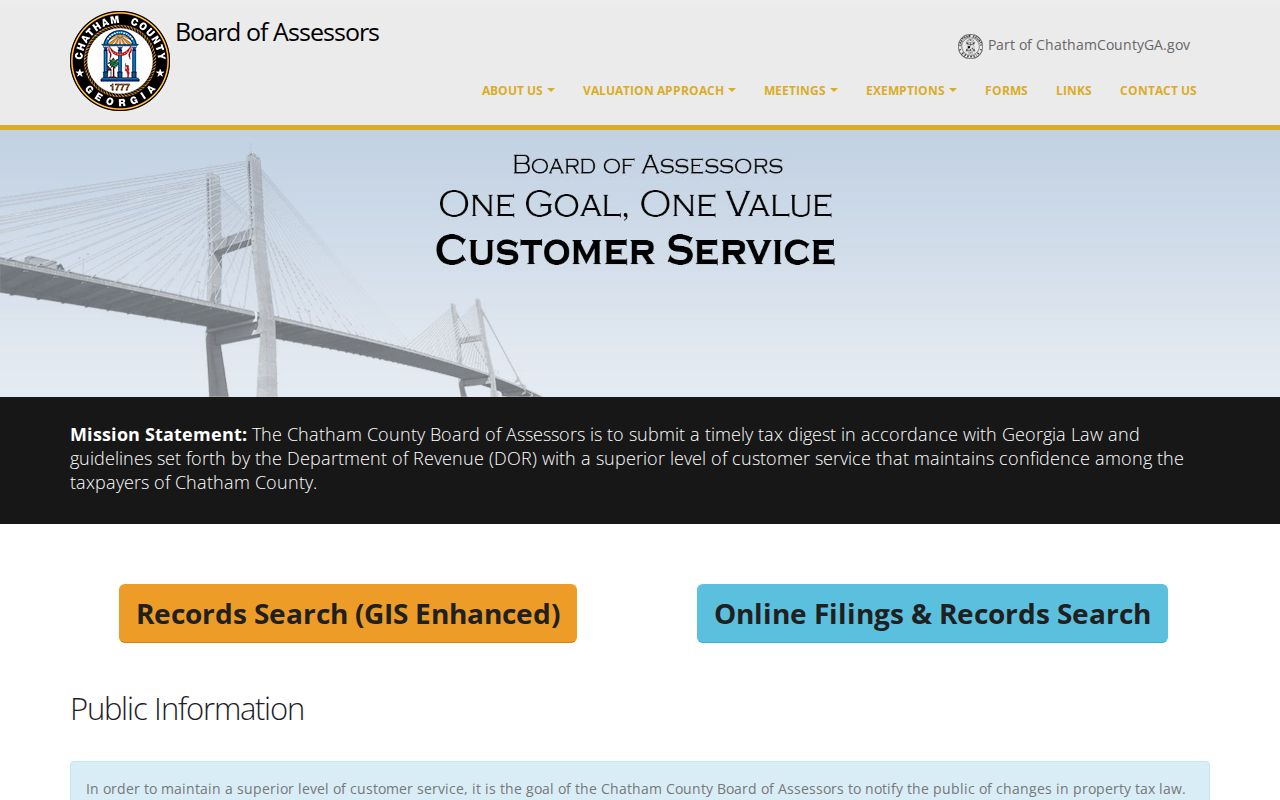
The official page is the stable starting point when the dynamic search address changes. Search both name and address, then retain the PIN and legal description for later checks.
| Property field | What it means |
|---|---|
| Owner name | Person or entity assessed for the parcel, not every occupant |
| Situs address | Physical location of the parcel |
| Mailing address | Destination for owner correspondence |
| PIN and legal description | Stable parcel keys that survive spelling and postal changes |
| Sale reference | A lead for locating the recorded deed |
Chatham County Deed Directory
Ownership research continues with the Clerk of Superior Court and the statewide GSCCCA real-estate index. A grantor transfers an interest; a grantee receives it. Search Chatham County, use the owner's name and sale date, then compare book and page, instrument type, and legal description. The seller on a confirmed deed can be searched as an earlier grantee to move backward.
The clerk records deeds, security deeds, liens, plats, UCC filings, trade names, and partnerships. A mortgage payoff usually produces a cancellation of security deed, not a replacement ownership deed. That local record distinction prevents a common wrong turn. Office searching and viewing are free, and the researched copy price is $0.50 per page.
See the Chatham Real Estate Division access page before choosing a portal, counter, or mail request.
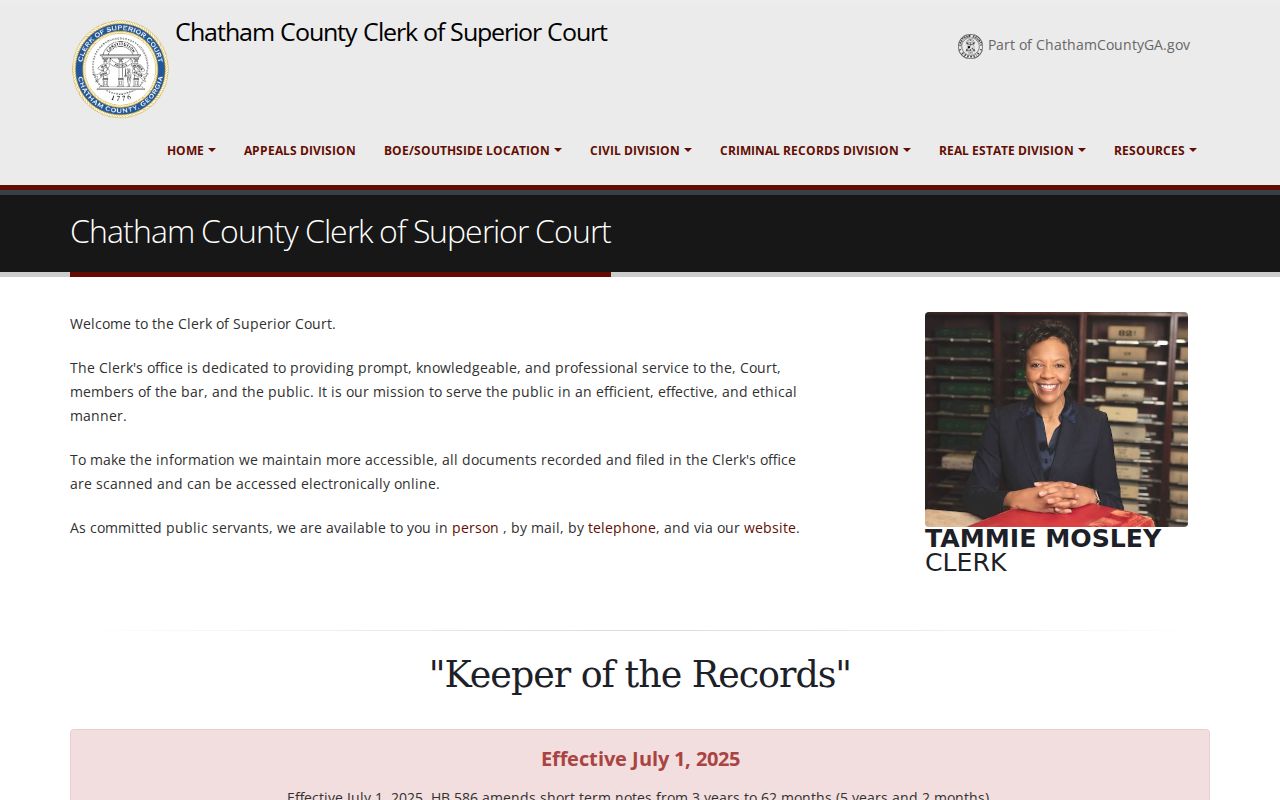
The official clerk page also points researchers toward the historical records center when an older deed book is not online.
Current Chatham County Resident Sources
Modern directory-like records cover only the population connected to each system. Owners appear in assessment and deed records. Registered voters appear under Georgia election law, with protected data removed. Court parties appear because of a filing. Public business and professional indexes establish an affiliation, not a home address. A Chatham County resident lookup should stay centered on one person and one fact to confirm.
| Official source | People represented | Record keeper | Access route |
|---|---|---|---|
| Property digest | Assessed owners | Board of Assessors | Free web search or office |
| Voter registration | Active and inactive registered voters | Georgia SOS and Chatham Elections | Self-lookup or paid public file |
| Real-estate index | Parties to recorded instruments | Superior Court clerk | GSCCCA, counter, or mail |
| Court index | Named parties to cases | Participating Chatham courts | County hub, Tyler search, or counter |
| Open Neighborhoods | Public organization contacts | City of Savannah | Free address search |
A commercial people-finder may combine old addresses without showing how they were sourced. An official roll supplies a custodian, a date, and a defined field. It can still be incomplete, but it can be checked and corrected at its source.
Georgia Voter Directory Limits
Georgia uses two distinct election channels. My Voter Page asks for a first initial, surname, county, and date of birth to return one voter's status, polling place, districts, and ballot information. It is not a block browser. A separately ordered public voter file may include name, residence and mailing address, status, registration date, precinct or district, and participation dates. Participation never reveals ballot choices.
The public file excludes telephone numbers, dates of birth, Social Security numbers, and driver's-license numbers. VoteSafe also withholds the residence addresses of qualifying people affected by family violence or stalking. Inactive status is not proof that someone moved away.
The official voter portal shows the identity-based entry point used for a personal check.
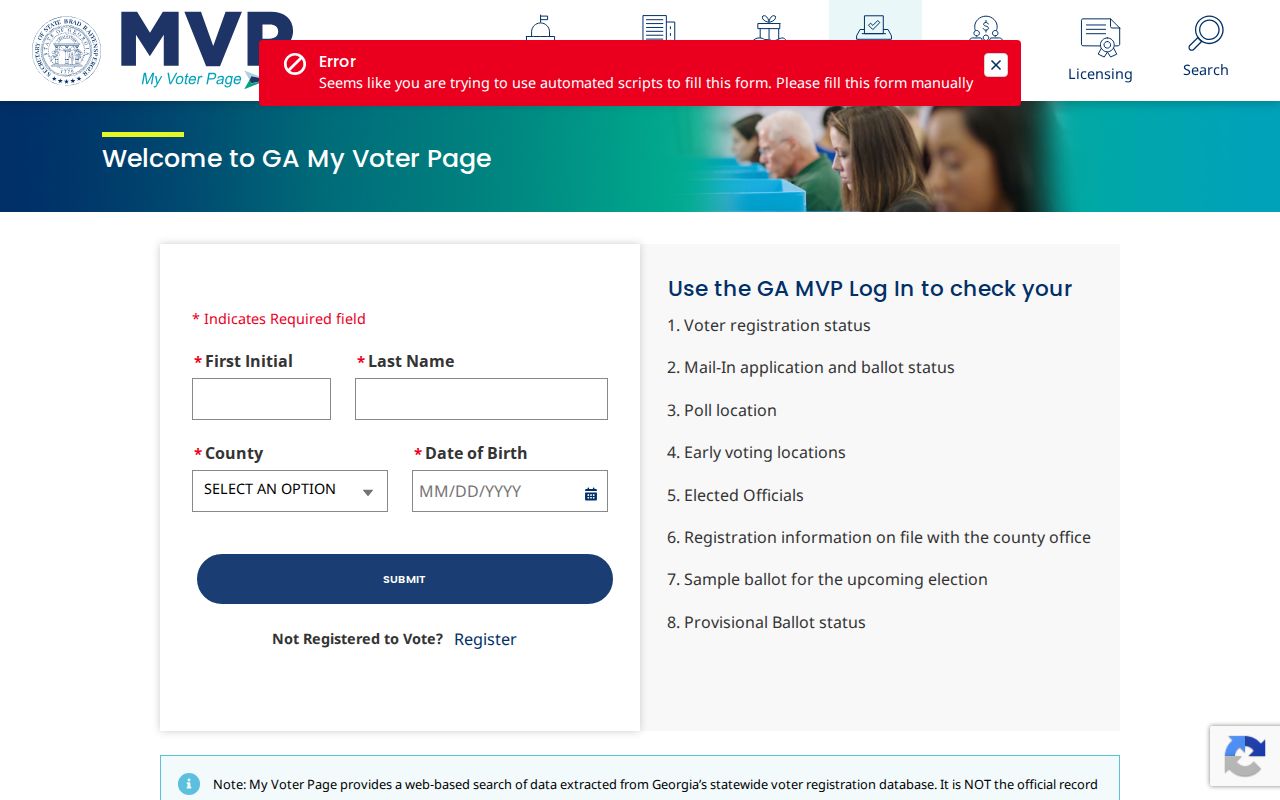
The difference matters: one tool verifies one registration, while a lawful public-file order supports broader address or precinct analysis under O.C.G.A. §§ 21-2-225 and 21-2-601.
Chatham County Court Records
Chatham County's court hub separates Superior, State, Magistrate, Probate, Juvenile, and Recorder's Courts. Superior Court handles major civil, domestic, and criminal filings. Probate Court is the better branch for estates, wills, guardianships, and county marriage licenses. Recorder's Court handles ordinance and traffic matters. A party address is dated case information, not proof of current residence.
The Chatham County courts hub is the official routing page.
Participating Superior and State records may also appear in Tyler re:Search. Account users can view a document face, and the researched print charge is $0.50. Closed cases may need a case number. Adoption, juvenile, sealed, and restricted records remain closed regardless of search channel.
- Docket
- The dated list of filings and events in a case.
- Index
- A finding tool that may show names and references without the filed image.
- Certified copy
- An official copy authenticated by the custodian, usually for a separate fee.
Chatham County Tax Records
The Board of Assessors and Tax Commissioner answer related but different questions. The assessor sets the appraised owner and parcel characteristics used in the digest. The Tax Commissioner publishes bills, payments, and delinquency services. A tax mailing line should not be silently converted into a resident address.
Open the Chatham County property-tax portal when the issue is a bill or payment rather than parcel identity.
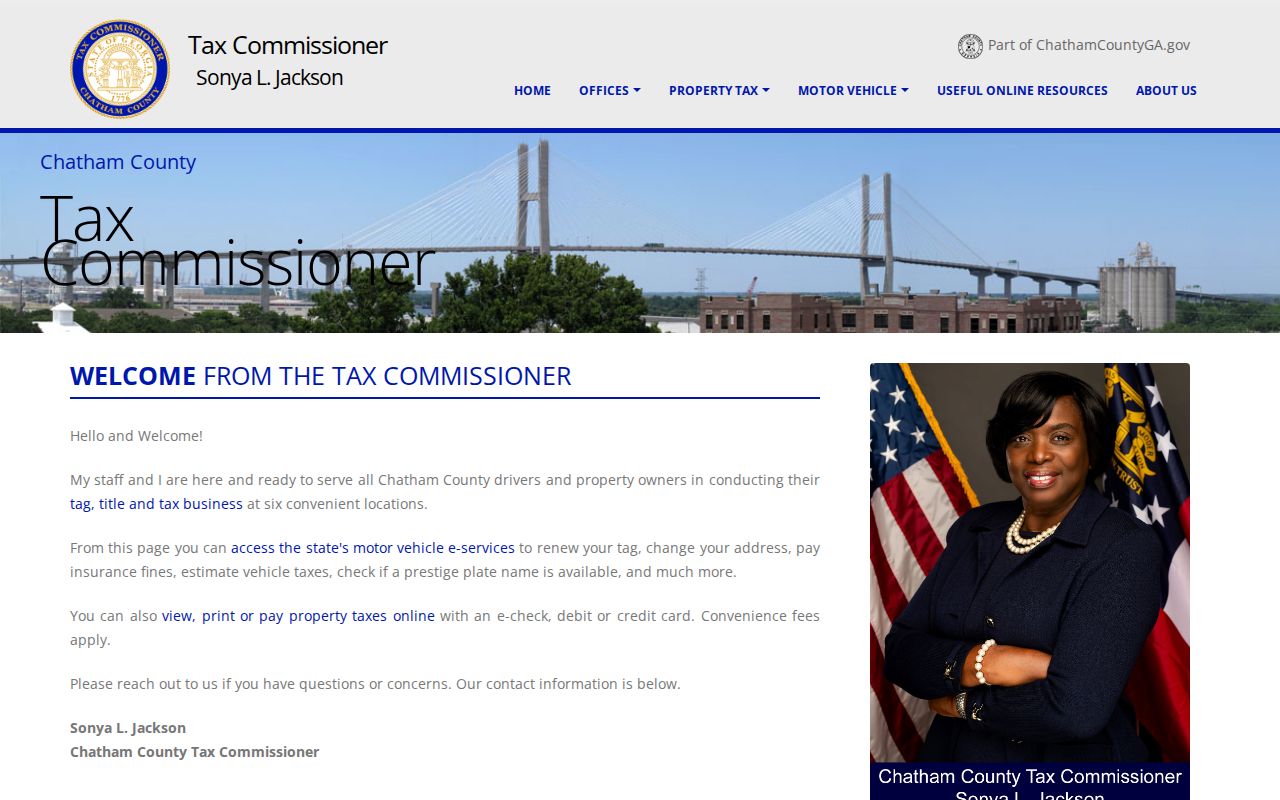
Cross-check the tax account against the assessor PIN and recorded deed. Those three sources can confirm a parcel and owner even when their display formats differ.
Lawful use. Chatham County resident records support personal research and civic transparency. Never use an address or protected detail to stalk, harass, or harm anyone.
Historic Chatham Resident Directories
Savannah's official directory holdings start with business volumes for 1848 and 1849 and resident listings in 1850. The free Digital Library of Georgia run covers 1871 through 1959 and spans nine publishers. A city directory entry may preserve a name, spouse, occupation, employer, address, home-ownership mark, or death notation. Its street section can reverse the search and place occupants in house-number order.
Live Oak Public Libraries' Bull Street branch holds the Kaye Kole Genealogy and Local History Room. Savannah Municipal Archives accepts research appointments and remote reference questions. Georgia Historical Society and Georgia Archives add cataloged local and state collections. The Chatham County city directory collections explain the complete year runs, abbreviations, and household-tracing method.
Savannah Records Beyond Directories
Municipal Archives preserves resident evidence that modern indexes miss. Its licensed datasets include Savannah vital records from 1803 to 1966, cemetery and burial records from 1852 to 1939, burial-lot cards from 1807 to 1995, court records from 1790 to 1934, and land-tax or property material from 1896 to 1938. It also holds naturalization, voter, title, and council records from defined historical spans.
The Clerk of Council says its records reach 1787. Minutes, oaths, contracts, cemetery deeds, and board files can name officials, petitioners, contractors, appointees, and cemetery-lot owners. These are dated civic connections, not a full list of residents.
The Savannah open-records page routes requests when a city record is not in a public index.
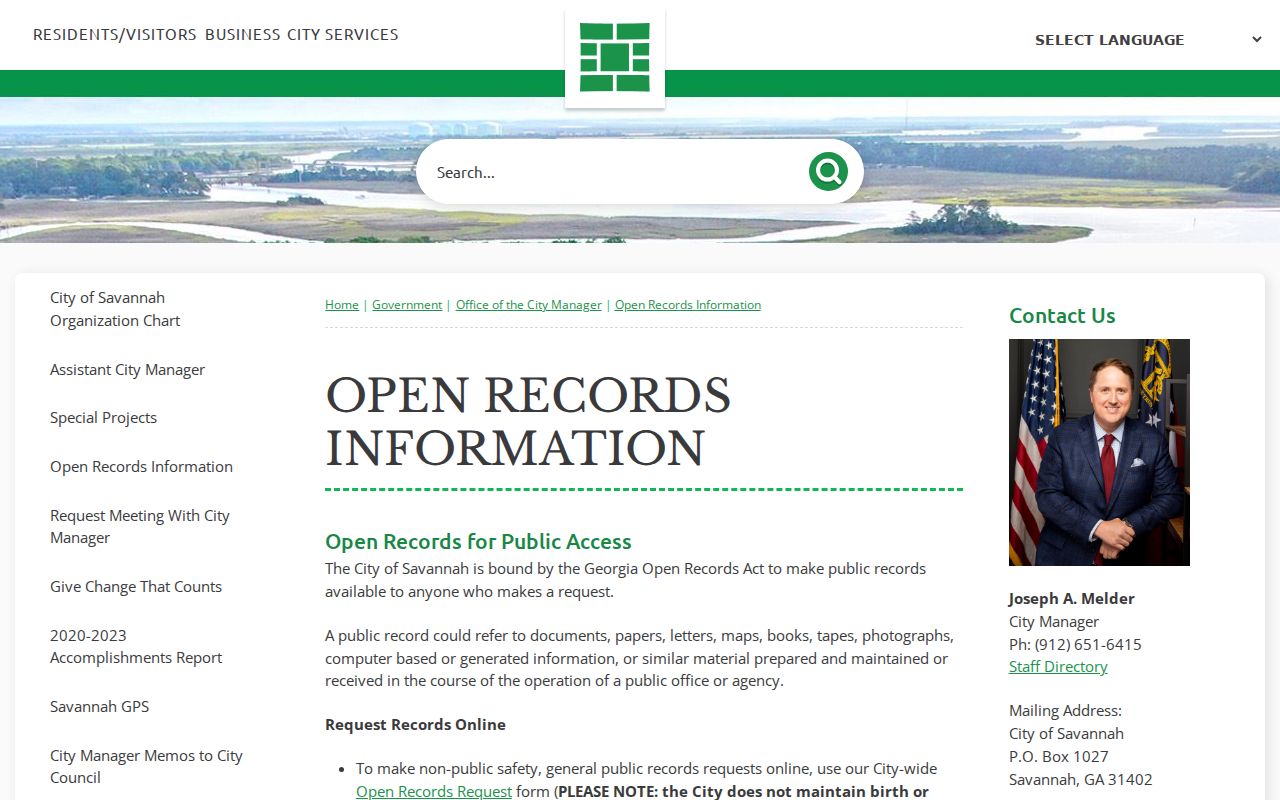
Police and fire requests use distinct routes. A focused request should name the department, record series, person or address, and date range.
Garden City Records Backstop
The Garden City Records Center at 4225 Augusta Road, Suite C, holds older civil, criminal, and domestic files along with deed books, plats, maps, and microfilm. Public terminals, scanners, and historical volumes make it the practical next stop when a web index ends. Physical-record research requires an appointment.
Bring the last confirmed book and page, party names, approximate date, PIN, and legal description. Staff can retrieve an existing record, but the Georgia Open Records Act does not require an agency to create a new list or analysis. The Act generally requires a response within three business days under O.C.G.A. § 50-18-71, which may be an acknowledgement, production, fee estimate, or lawful withholding explanation.
The Georgia open-records form illustrates the statewide request process.
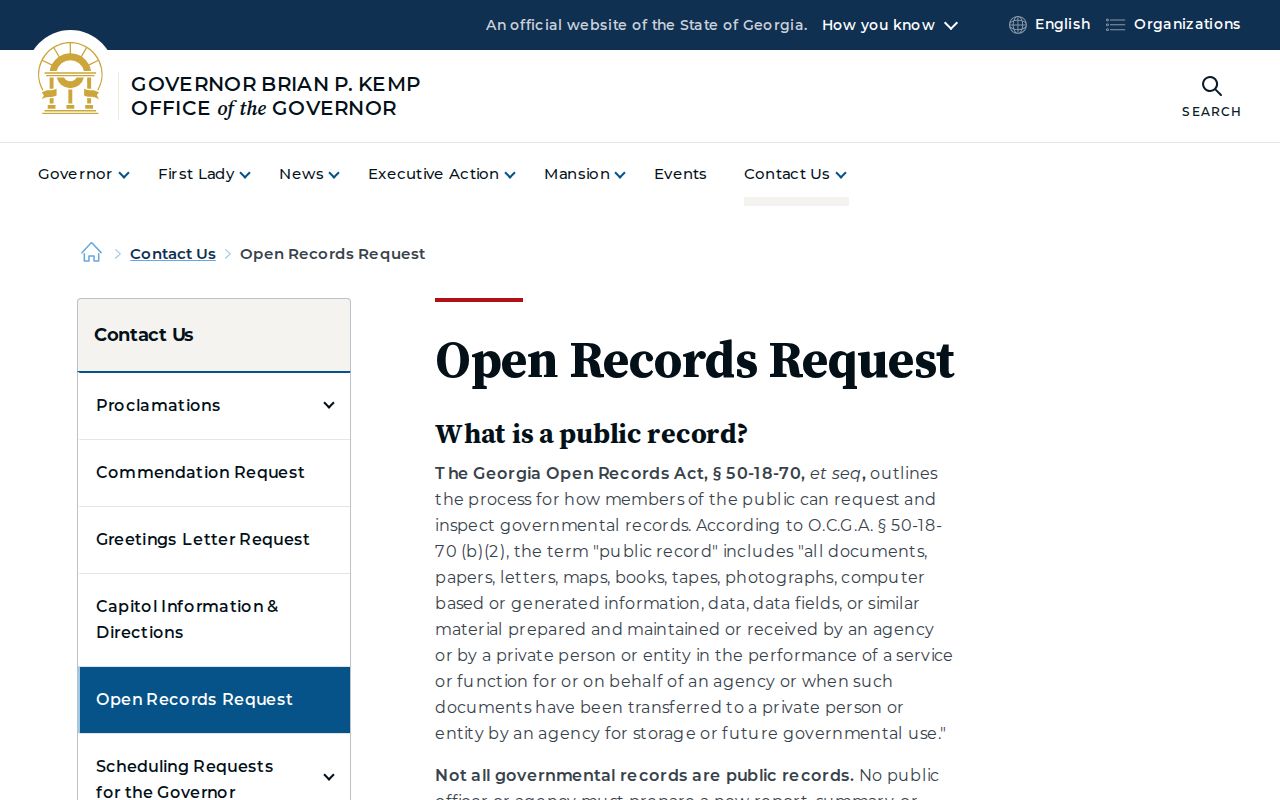
An exact record request is more useful than asking an office to identify everyone connected to a person or address.
Reading Chatham County Resident Evidence
Label each result before combining it. An owner is the assessed owner or deed grantee. An occupant is the person or business tied to an address in a directory year. A registered voter has a dated registration record. A registered agent accepts process for a business. A court party supplied an address in a case. These terms are not interchangeable.
A strong match uses two dated sources with compatible details. An assessor owner and deed grantee with the same legal description establish ownership. A directory entry at that address can establish period occupancy. A homestead flag may add support, but does not identify every household member. For a common name, preserve the middle initial, spouse, occupation, entity punctuation, and party role.
Negative results need the same care. Try former names, initials, spelling variants, old street forms, and unit formats. Then move from portal to counter, current roll to archive, or address text to parcel and legal description. Record the result as “not found in this index under these criteria.” That is accurate and leaves room for coverage gaps, protected records, and indexing errors.
Chatham Heir and Family Trails
Probate records become useful when a resident trail ends in death or an estate transfer. Chatham County Probate Court may hold an estate file, will, personal representative, and names of heirs, subject to the access status of the individual file. The Superior Court clerk may then hold a deed of assent, executor's deed, or later conveyance tied to the same parcel. An obituary can supply relatives and dates as leads, but it does not make a legal finding of heirship.
Start with a full name and death or cemetery evidence. Check the Chatham Probate Court, then compare the estate names with the deed index and the address printed in directories just before the death. A cemetery lot card may show a family cluster. For events before statewide vital registration, Savannah's municipal vital and cemetery collections, church registers, newspapers, and Georgia Archives can extend the search. Label these as genealogical evidence unless a certified record or court order says more.
Chatham Address Geography Matters
A postal city is not a legal jurisdiction. Addresses with “Savannah” in the mailing line can fall on islands or in unincorporated Chatham County. Pooler, Port Wentworth, Garden City, Bloomingdale, and Tybee Island also lead to different permit and municipal custodians. Verify the deliverable ZIP through USPS, then use SAGIS to identify the municipal boundary and parcel.
This two-part check also prevents a city open-records request from being sent for a county permit, or a county query from overlooking a municipal file. Record the mapped jurisdiction beside the postal result before searching.
Historic downtown property may be described by ward, tything, or trust lot. Later subdivisions rely on lot and block, while some tracts use metes-and-bounds descriptions. These title keys can remain stable when a street number or postal form changes. The assessor's situs ZIP locates a parcel; an owner mailing ZIP routes correspondence. Keeping those fields separate avoids assigning a Chatham County resident to the wrong place or asking the wrong city for a permit file.